
Condition contaminated material using complex calcium silicate chemistry.


Heavy Metal Stabilization Technology
How Blastox® Works
Blastox® uses complex calcium silicate chemistry to reduce the leachability of lead and other heavy metals through multiple stabilization mechanisms.
Rather than relying only on pH adjustment, the technology combines alkaline conditioning, chemical conversion, and encapsulation to help immobilize metals under acidic leaching conditions.
Reduce the solubility and mobility of lead and other heavy metals.
Confirm treatment performance through appropriate analytical testing.
Stabilization Chemistry
Designed to Reduce Heavy Metal Leachability
Blastox® is a complex calcium silicate stabilization chemistry designed to reduce the leachability of lead and other heavy metals in contaminated waste.
The objective is not simply to change the pH of the waste. Blastox® uses several stabilization mechanisms that work together to reduce the ability of metals to migrate when contaminated material is exposed to acidic conditions.
The Chemistry Behind Blastox®
Three Stabilization Mechanisms Working Together
Blastox® stabilization combines chemical and physical mechanisms rather than depending on a single treatment effect.
Chemical Environment
Alkaline Waste Matrix
Blastox® creates conditions where certain heavy metals are more resistant to acidic leaching.
Chemical Reaction
Chemical Conversion
Soluble lead compounds are converted into less-soluble lead silicate forms that are more resistant to leaching.
Physical Stabilization
Micro & Macro Encapsulation
Physical encapsulation helps limit water access to stabilized material and further reduces opportunities for metals to leach.
Beyond Simple Buffering
Stabilization Is More Than pH Control
Blastox® is designed to maintain metal stabilization through mechanisms beyond alkaline buffering alone.
This multi-step approach separates stabilization from a treatment strategy that relies only on maintaining a high pH.
Blastox® calcium silicate chemistry is also recognized under EPA Best Demonstrated Available Technology for heavy-metal stabilization.
Same Technology. Different Applications.
How Blastox® Is Applied in the Field
The stabilization chemistry remains consistent, but the way the product is introduced into contaminated material changes according to the application.
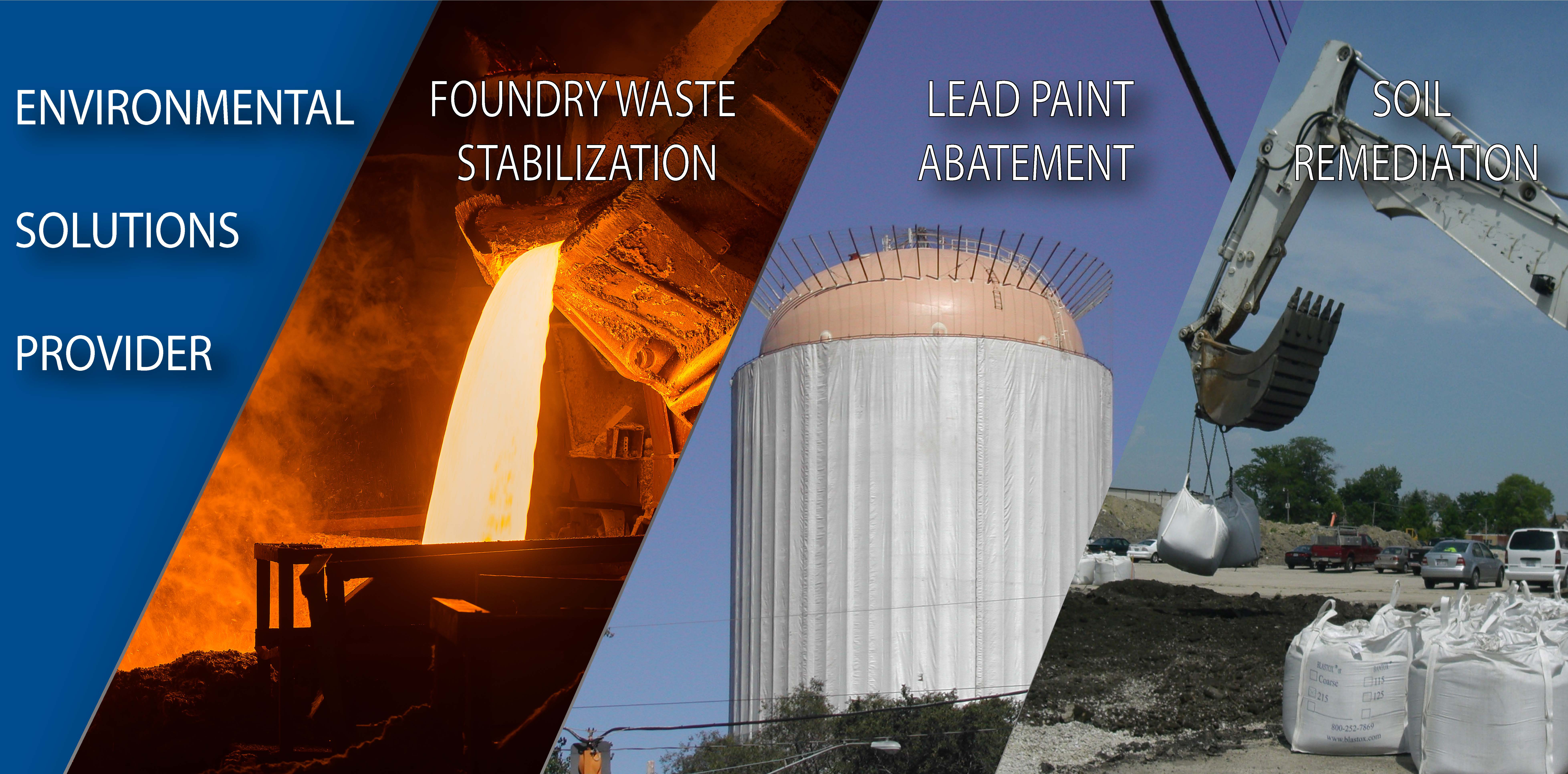
Lead Paint Removal
Stabilization Begins While the Waste Is Being Generated
For lead paint removal, Blastox® is pre-blended with non-recyclable abrasive before it reaches the jobsite.
As blasting removes the coating, Blastox® becomes incorporated into the spent abrasive and lead-paint debris. This allows stabilization to occur as the waste is generated.
One Step Lead Abatement
No separate post-blasting chemical treatment step.
Explore One Step Lead Abatement →
Blastox® 215 Soil Remediation
Mixed Directly Into Lead-Contaminated Soil
Blastox® 215 is incorporated directly into contaminated soil at a treatment rate established for the project.
As the material is thoroughly blended, alkaline conditioning, chemical conversion, and encapsulation occur throughout the treated soil.
Treatment Rate Matters
Project-specific testing helps establish the appropriate dosage.
Explore Soil Remediation →
Firing Range Remediation
Stabilizing Lead-Impacted Berm and Range Soil
Firing-range berms and soils can accumulate significant levels of lead from bullets and bullet fragments.
Blastox® 215 can be mixed into this contaminated material to reduce lead leachability before disposal.
Characterize. Treat. Verify.
The process follows the same core stabilization and testing
principles used in other soil-remediation applications.
Explore Firing Range Remediation →
Blastox® 215 Treatment Process
From Analytical Data to Confirmatory Testing
Soil-remediation projects typically move through a structured process that establishes treatment requirements before full-scale stabilization.
Review Analytical Data
Evaluate total metals, TCLP data, material characteristics, project volume, and disposal requirements.
Establish the Treatment Rate
Determine an appropriate Blastox® 215 dosage using project data and treatability testing when required.
Mix Thoroughly
Incorporate Blastox® 215 throughout the contaminated soil so the stabilization chemistry can act across the treated material.
Collect Representative Samples
Sample treated material using the project-specific sampling and verification plan.
Confirm Performance
Perform confirmatory TCLP testing to evaluate post-treatment leachability and support waste-management decisions.
Performance Verification
Evaluated Through TCLP and Multiple Extraction Testing
Blastox® has been evaluated using both the Toxicity Characteristic Leaching Procedure and the Multiple Extraction Procedure.
These testing approaches help evaluate both immediate leachability and the stability of treated material when exposed repeatedly to acidic extraction conditions.
TCLP
The Toxicity Characteristic Leaching Procedure evaluates the tendency of contaminants to leach from a waste material.
MEP
The Multiple Extraction Procedure repeatedly exposes the same treated material to acidic conditions to evaluate longer-term stability.
Long-Term Stability
EPA-sponsored testing found that Blastox®-treated lead remained immobilized after the treated material’s buffering capacity was reduced, supporting stabilization mechanisms beyond pH control.
Talk With TDJ Group
Have a Heavy Metal Stabilization Project?
Share your waste data, material type, analytical results, project volume, and disposal requirements with the TDJ Group technical team.