TCLP Risk
Elevated leachable lead can affect disposal options, project planning, and regulatory review.



Lead-Contaminated Gun Range Soil? Stabilize Leachable Lead with Blastox® 215.
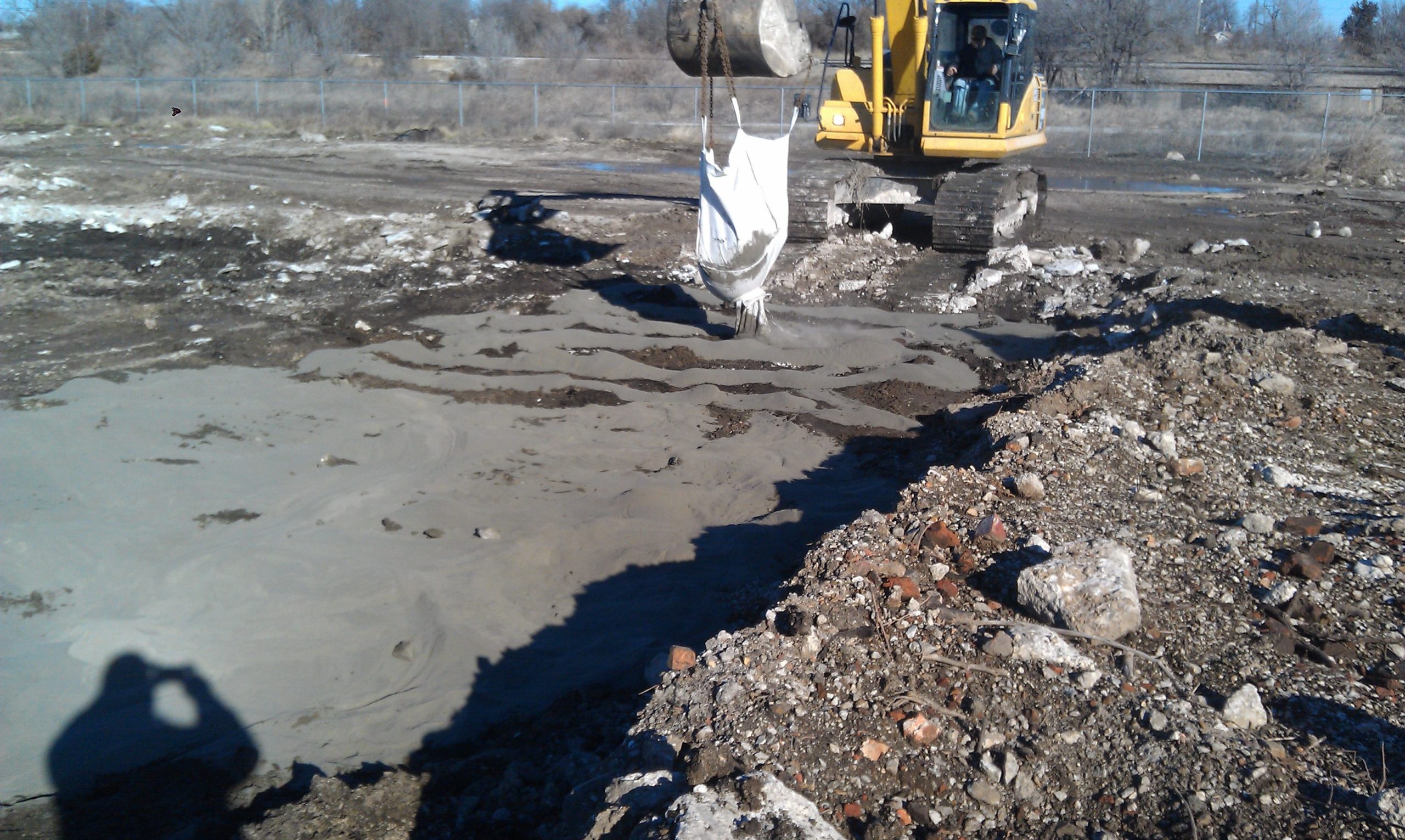
Blastox® 215 is added directly to contaminated soil, berm material, backstops, and excavated range media to help stabilize leachable lead and support TCLP results.
Project risk
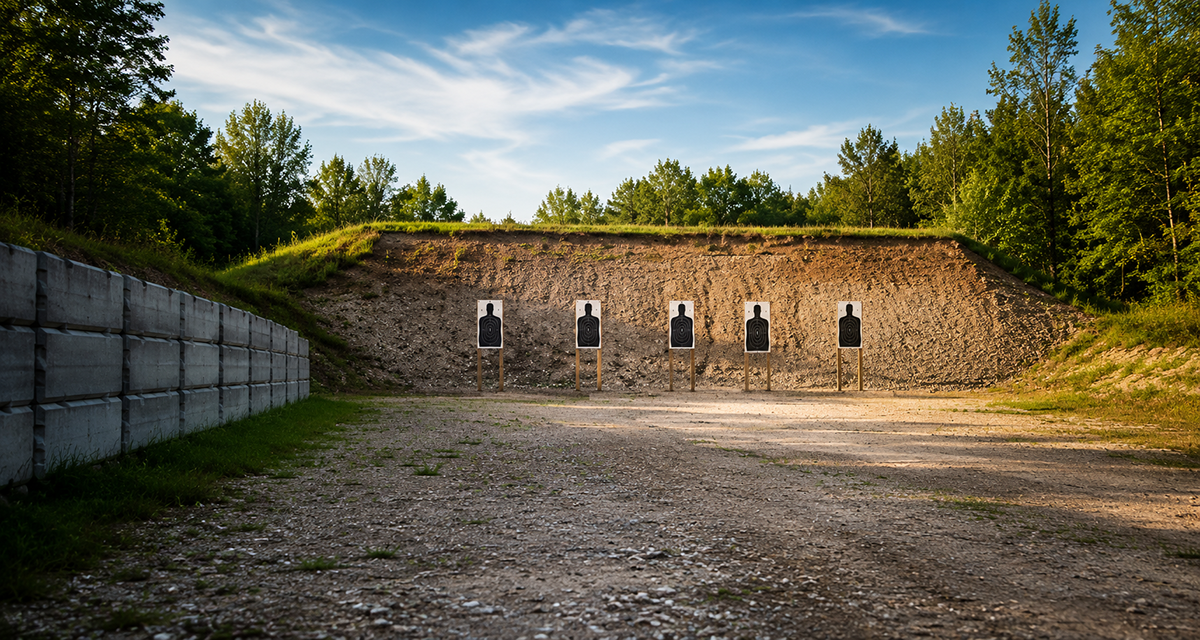
Gun range remediation projects often involve lead-impacted berms, bullet impact zones, backstop material, and excavated soil. If TCLP results show elevated leachable lead, the project team may face hazardous waste concerns, higher disposal costs, transportation issues, and bid uncertainty. If you have TCLP results, soil data, project specs, or an upcoming range remediation project, TDJ Group can review the details and help determine best course of action.
Elevated leachable lead can affect disposal options, project planning, and regulatory review.
Hazardous waste disposal, transportation, and landfill requirements can increase the cost and uncertainty of range remediation projects.
Contractors and consultants managing range remediation need practical dosing guidance before full-scale treatment or remediation.
Have gun range project data? Send it for review.
Technical intake
If you are evaluating gun range remediation services for lead-impacted soil, berms, backstops, or excavated range material, TDJ Group can review your project information and help determine whether Blastox® 215 should be evaluated for treatment planning, treatability testing, or dosing guidance.
A review can help reduce uncertainty before pricing, bidding, treatment, or field execution for range remediation projects.
Treatment recommendations depend on project-specific data, testing, dosing, field execution, and applicable requirements.
Application fit
Outdoor and indoor gun range berms
Bullet impact zones
Backstop material
Excavated range soil
Lead-contaminated soil stockpiles
Gun range closure or reconstruction projects
Police and public safety ranges
Military or government training ranges
Gun range berm and soil projects
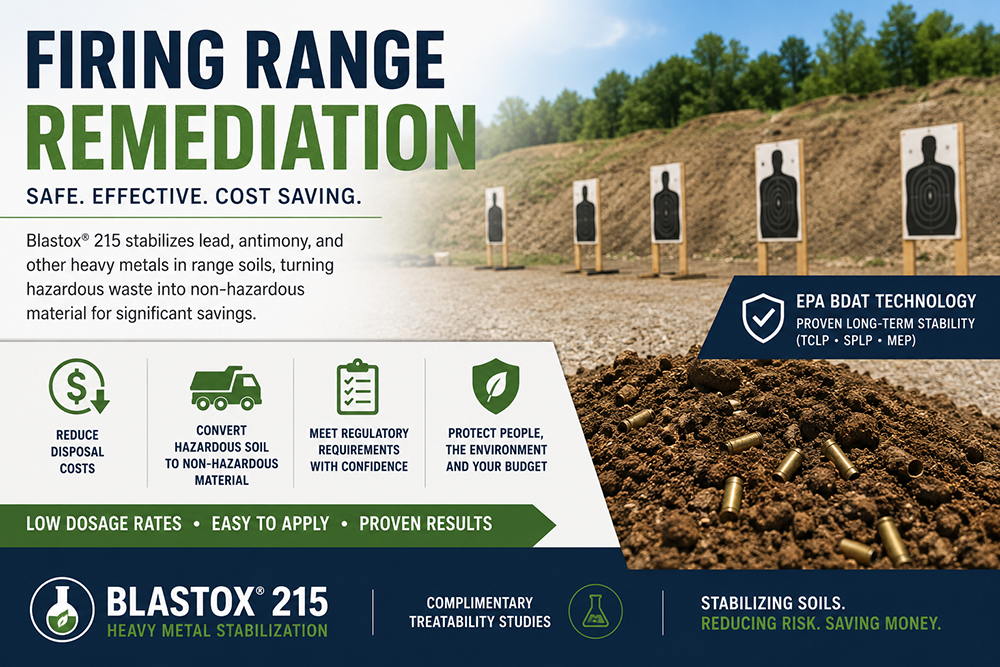
Gun range remediation often involves berm soil, bullet impact material, excavated media, and stockpiled soil. Blastox® 215 may be reviewed as part of a project-specific stabilization strategy when leachable lead is driving disposal, treatment, or cleaning concerns. Blastox® 215 is used for stabilization, not physical lead removal. It helps reduce leachable lead when properly evaluated, dosed, mixed, and confirmed through project-specific testing.
Submit gun range soil details for reviewWho this is for
Evaluate treatment options, TCLP data, and project specifications for gun range remediation.
Plan treatment, mixing, disposal, and field execution for range remediation projects.
Address lead-impacted soil during gun range maintenance, cleaning, closure, expansion, or reconstruction.
Support police, military, municipal, and public safety gun range remediation projects.
Review process
The next step is a project-specific technical review for your range remediation needs, not a generic sales call.
Send TCLP results, soil data, project specs, or a short summary of your gun range remediation project.
TDJ Group reviews the project fit, lead leachability concern, available data, and gun range remediation objectives.
When samples are available, treatability testing can help confirm treatment needs for range soil or backstop material.
Use the results to support bidding, treatment planning, range remediation services, and disposal discussions.
Technical support
Blastox® 215 is a dry stabilization chemistry used in heavy metal soil applications, especially lead-impacted gun range soil. TDJ Group supports project teams with treatability review, dosing guidance, and practical planning support for range remediation services.
For gun range remediation projects, the goal is to help teams evaluate whether Blastox® 215 should be considered for lead stabilization, TCLP-focused review, and disposal planning.
Common questions
It may be evaluated for lead-impacted gun range soil, berms, backstops, and excavated material where leachable lead is a concern.
Submit TCLP data, total metals data, estimated volume, project location, timeline, disposal requirements, and any relevant specs or reports for the gun range remediation project.
Environmental consultants, remediation contractors, range owners, public agencies, lead reclamation firms, and gun range maintenance companies can request a review.
Submit your project data
Send TDJ Group your data and project details to evaluate whether Blastox® 215 should be considered for lead stabilization, treatability review, and disposal planning.